Broad, Phrase or Exact: Which Match Type for Your Keywords?
A practical guide to choosing match types in Google Ads. When to use Broad, Phrase, Exact, and how to combine them effectively.
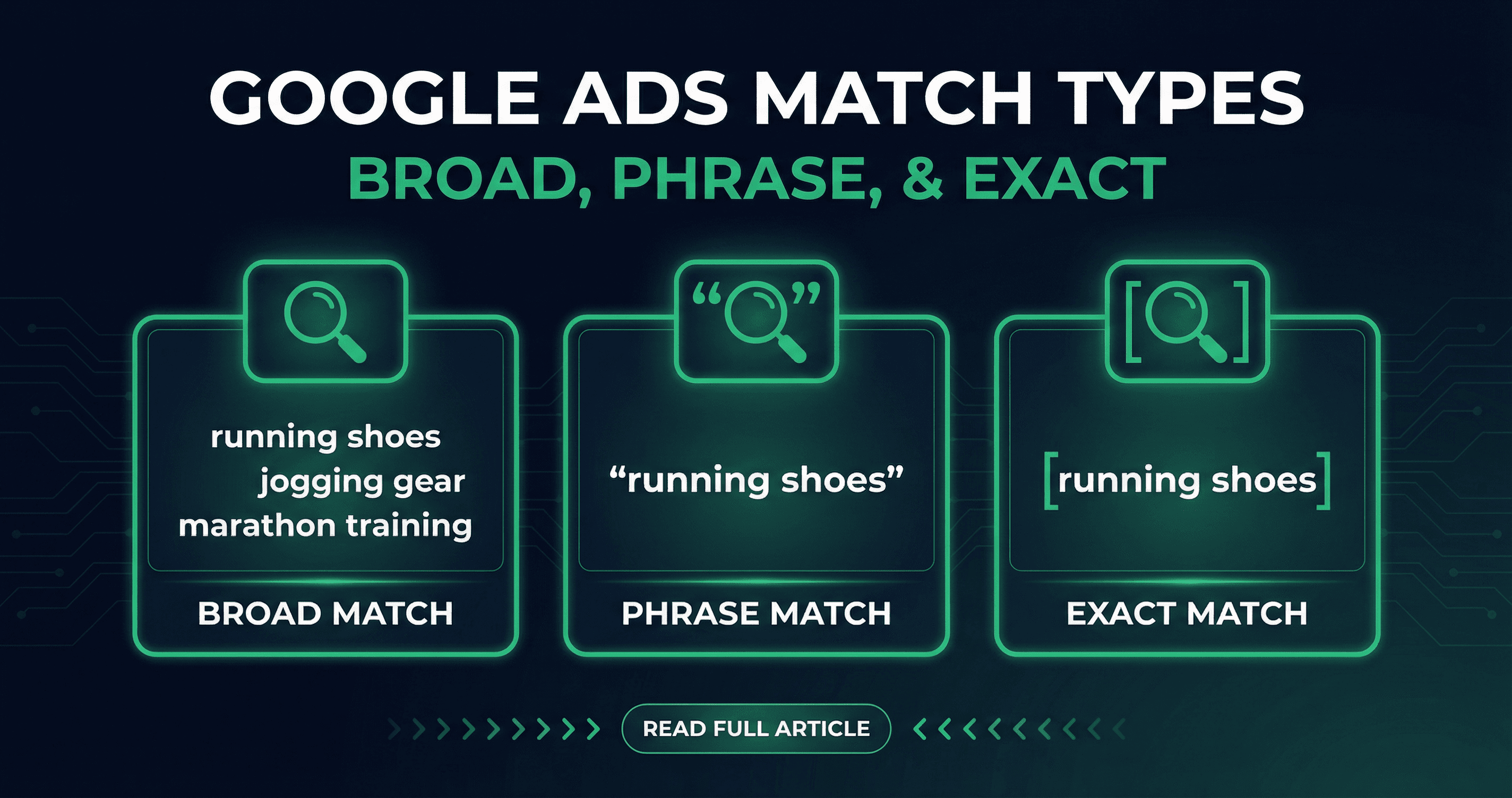
Match type affects reach, relevance and cost. In 2026 with Google's AI interpreting search intent, match type strategy has evolved significantly. This guide explains how each works, when to use each, and how to build a strategy that balances reach with control.
How Match Types Work in 2026
Google has progressively broadened all match types. Exact match now includes synonyms with the same intent. Phrase match captures the meaning of your keyword. Broad match gives maximum flexibility combined with AI signals like recent searches and landing page content.
- Exact [keyword]: Triggers for exact meaning and close variants
- Phrase "keyword": Triggers when search includes keyword meaning
- Broad keyword: Maximum reach, best with Smart Bidding
Match Type Strategy by Campaign Stage
Your match type strategy should evolve with your data maturity. New campaigns need control, established campaigns can leverage broader reach.
New campaigns (0-30 days)
Start with Phrase and Exact match. You need controlled data to understand what converts. Set up conversion tracking first and gather at least 30 conversions before considering Broad.
Established campaigns (30+ conversions)
Test Broad match with Smart Bidding (Target CPA or Maximize Conversions). Broad + Smart Bidding can discover high-converting queries you'd never target manually. Expect 10-20% more conversions at similar CPA.
The Critical Role of Negative Keywords
Negative keywords are essential for any match type but critical with Broad. Without comprehensive negatives, Broad match shows ads for many irrelevant searches.
- Add negatives before launching Broad match campaigns
- Review Search Terms daily for the first week of Broad match
- Build negative lists by theme (competitors, jobs, free, DIY)
- Use negative Exact match to block specific queries while keeping variations
- Share lists across campaigns for consistency
Related articles
Google Ads Automation Scripts Guide: Save Hours With These Proven Scripts
Learn how to use Google Ads scripts to automate repetitive tasks. Covers bid management, budget alerts, reporting, Quality Score monitoring, and more with ready-to-use examples.
Google Ads Remarketing Best Practices: The Complete 2026 Guide
Master Google Ads remarketing with proven best practices. Learn audience segmentation, frequency capping, creative strategy, and cross-channel remarketing techniques.
Performance Max Optimization Guide: How to Get Real Results From PMax in 2026
A practical guide to optimizing Performance Max campaigns. Learn asset group strategy, audience signals, search theme targeting, and how to control where PMax spends your budget.
Stop reading. Start optimizing.
Connect Google Ads and detect wasted spend with real data
AdPredictor analyzes your campaigns with AI: zero-conversion keywords, budget alerts, and actionable recommendations. Read-only. No registration required.
Get your free auditNo registration · Results in 30 seconds
Weekly AI & Google Ads Newsletter
AI news, Google Ads tips, and optimization strategies every Tuesday. No spam.
Content reviewed by the AdPredictor team. Editorial policy